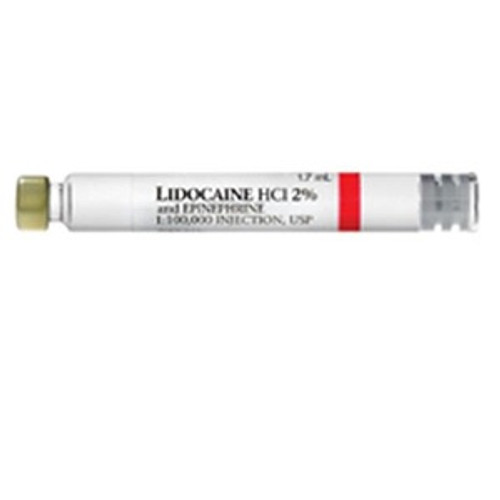

- An injectable prescription-grade local anesthetic containing Lidocaine Hydrochloride (2%) combined with Epinephrine (1:100,000), primarily supplied in single-use 1.7mL cartridges
Uses
- Dental Infiltration:
- Used to numb localized, specific areas of the gum and soft tissue for minor dental work
- Nerve Blocks:
- Used for larger, regional numbing of the jaw before procedures such as root canals or tooth extractions
- Intermediate Duration Procedures:
- Ideal for dental treatments that require an active numbing duration of roughly 60 minutes for infiltration and 90 minutes for nerve blocks
Features
- Active Ingredients:
- Combines 2% lidocaine hydrochloride (a fast-acting numbing agent) with epinephrine 1:100,000 (a vasoconstrictor)
- U.S.P. Specifications:
- Manufactured to strict U.S. Pharmacopeia quality standards for safety and reliability
- Cartridge Format:
- Packaged in standard 1.7mL glass carpules
- Protective Blister Packs:
- Ampoules are double-packed in blister packaging to protect the sensitive solution from degradation by light and air
Benefits
- Rapid Onset:
- Provides fast-acting pain relief, allowing dental professionals to begin work quickly
- Reduced Bleeding:
- The epinephrine acts as a vasoconstrictor, which narrows blood vessels at the injection site, decreasing bleeding and improving overall visibility of the surgical field
- Prolonged Effect:
- By restricting blood flow, epinephrine keeps the lidocaine localized in the target tissue for a longer period, enhancing the depth and duration of the numbing effect
- Lower Toxicity Risk:
- By limiting how quickly the body absorbs the anesthetic into the systemic bloodstream, the vasoconstrictor helps minimize the risk of lidocaine toxicity